Unitest introduces Tugboat UE, a new version of its tugboat engine-room simulator. The simulator combines an integrated machinery model with free movement through the 3D engine room, local equipment operation and shared training sessions with visible student avatars.
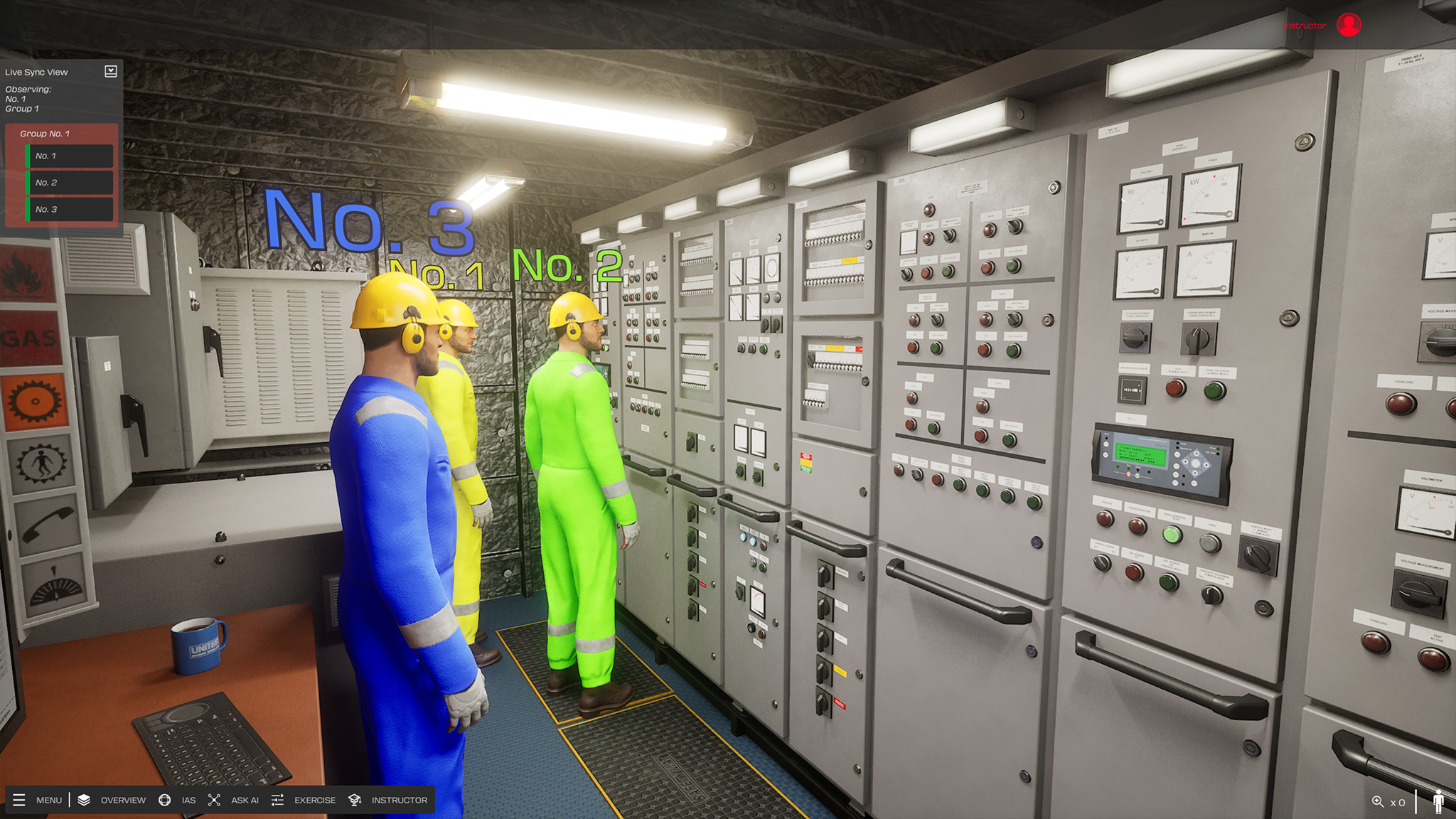
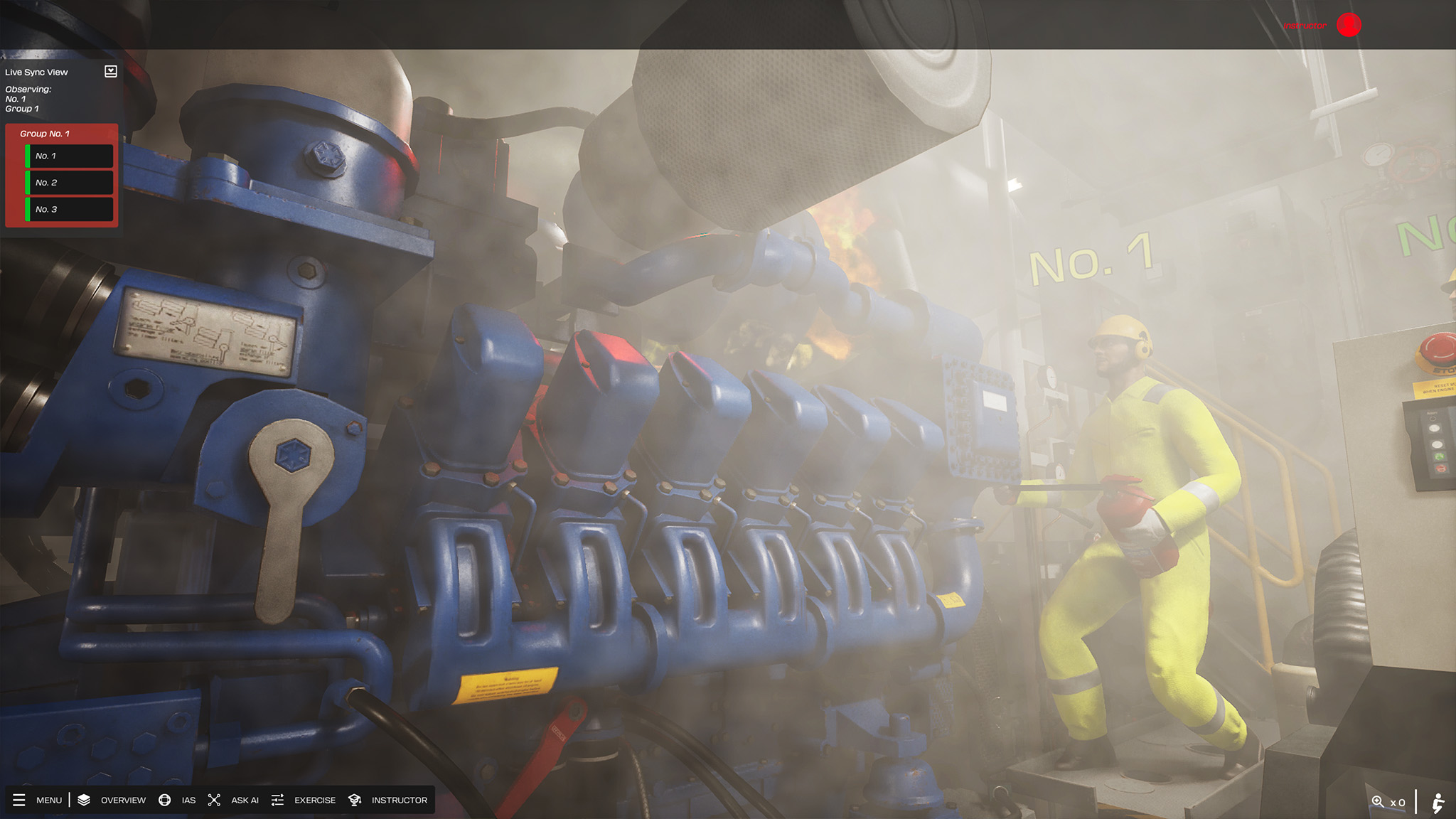
Free movement and local operation
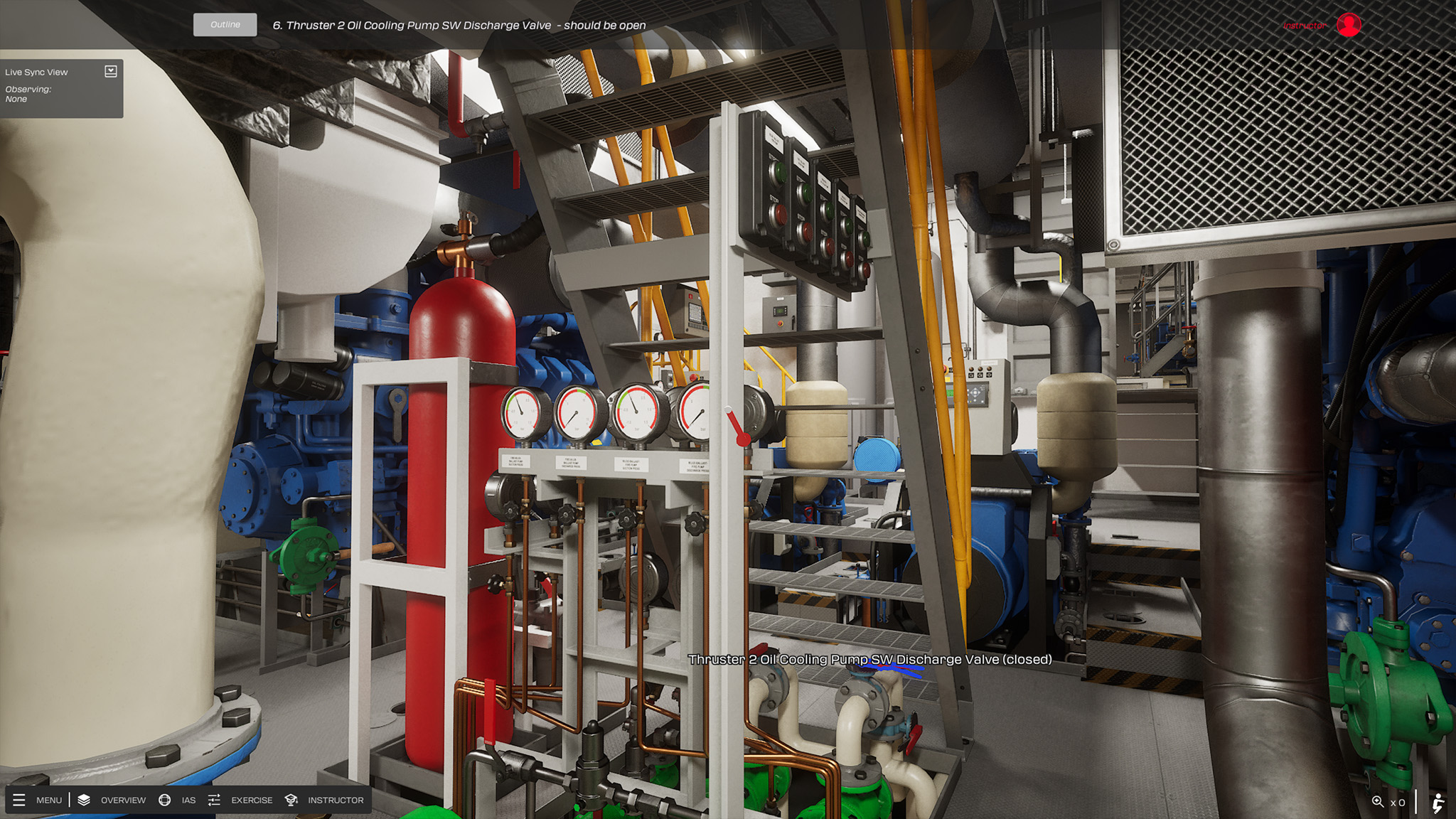
Trainees navigate the machinery spaces, locate equipment, inspect instruments and operate valves, switches and local control panels. Equipment location and movement between operating stations become part of the exercise, bringing training procedures closer to the practical work of a marine engineer.
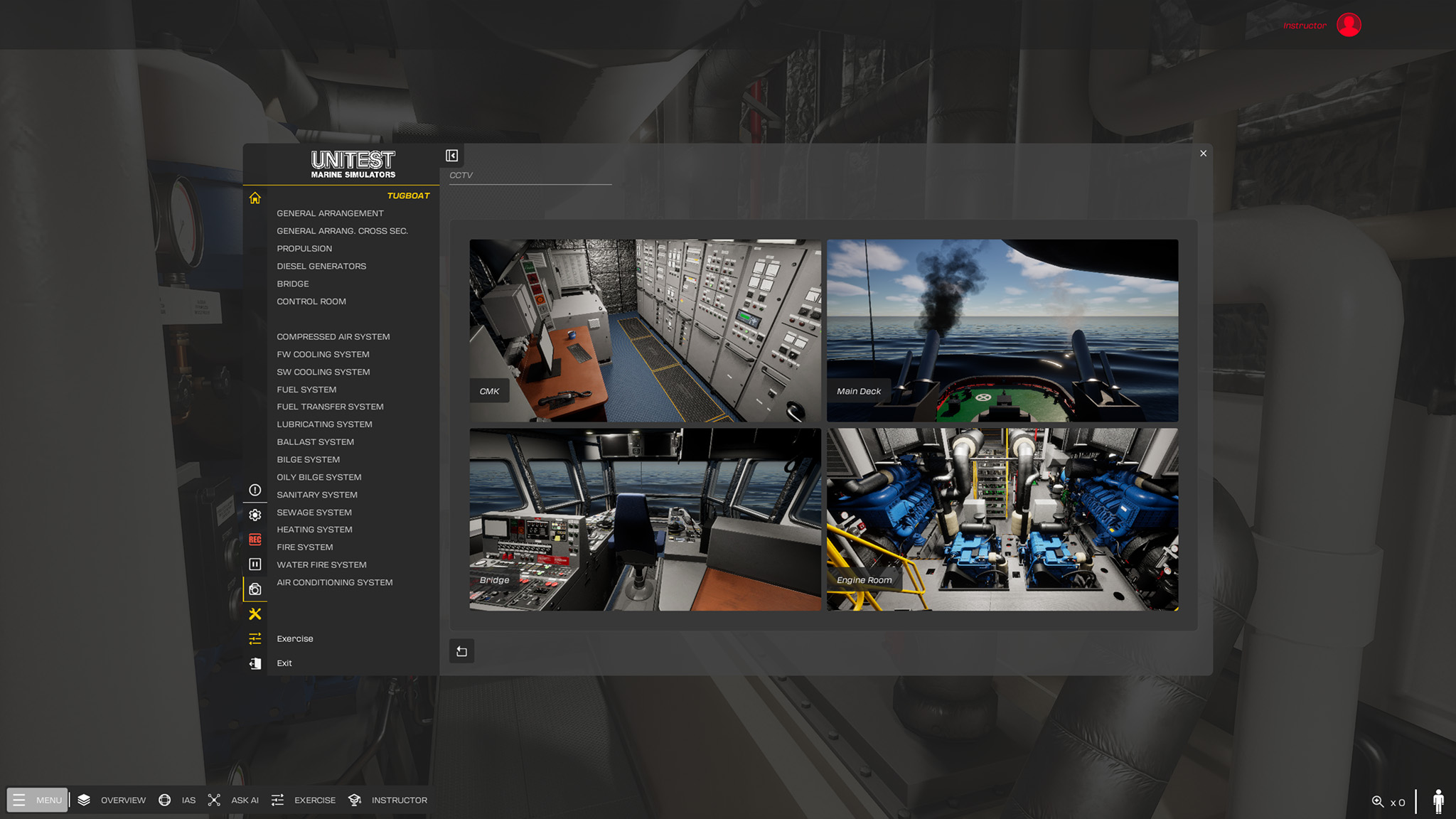
The familiar navigation maps and automatic transfer to selected equipment remain available for initial familiarisation. For more advanced exercises, the instructor can disable Overview and teleportation, requiring trainees to locate equipment independently.
Multi-User exercises and visible avatars
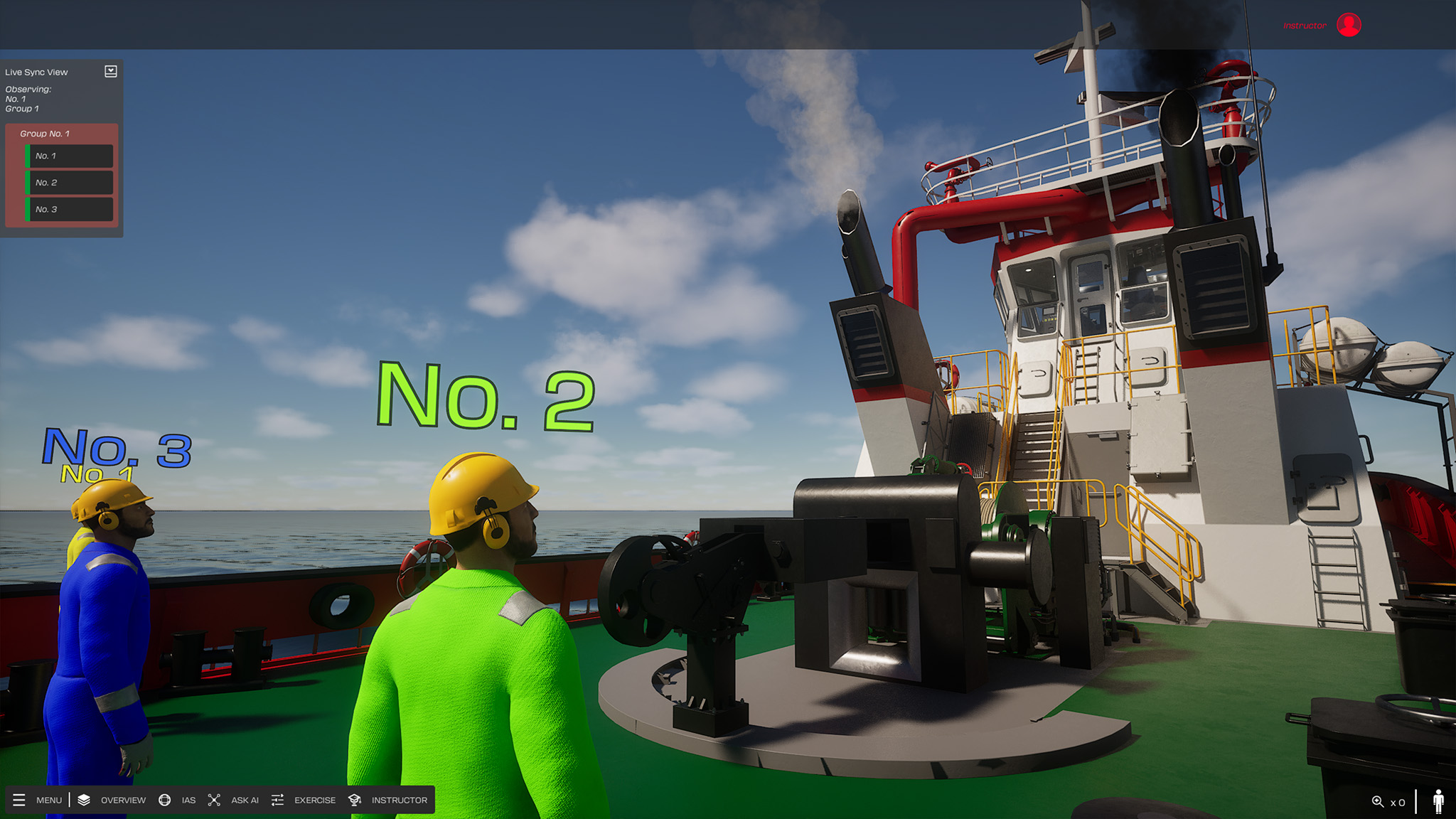
Students can work together in the same simulated engine room. Each participant is represented by a visible avatar, and equipment operations affect the shared plant state. This allows instructors to assign complementary tasks and practise communication, coordination and Engine-room Resource Management.
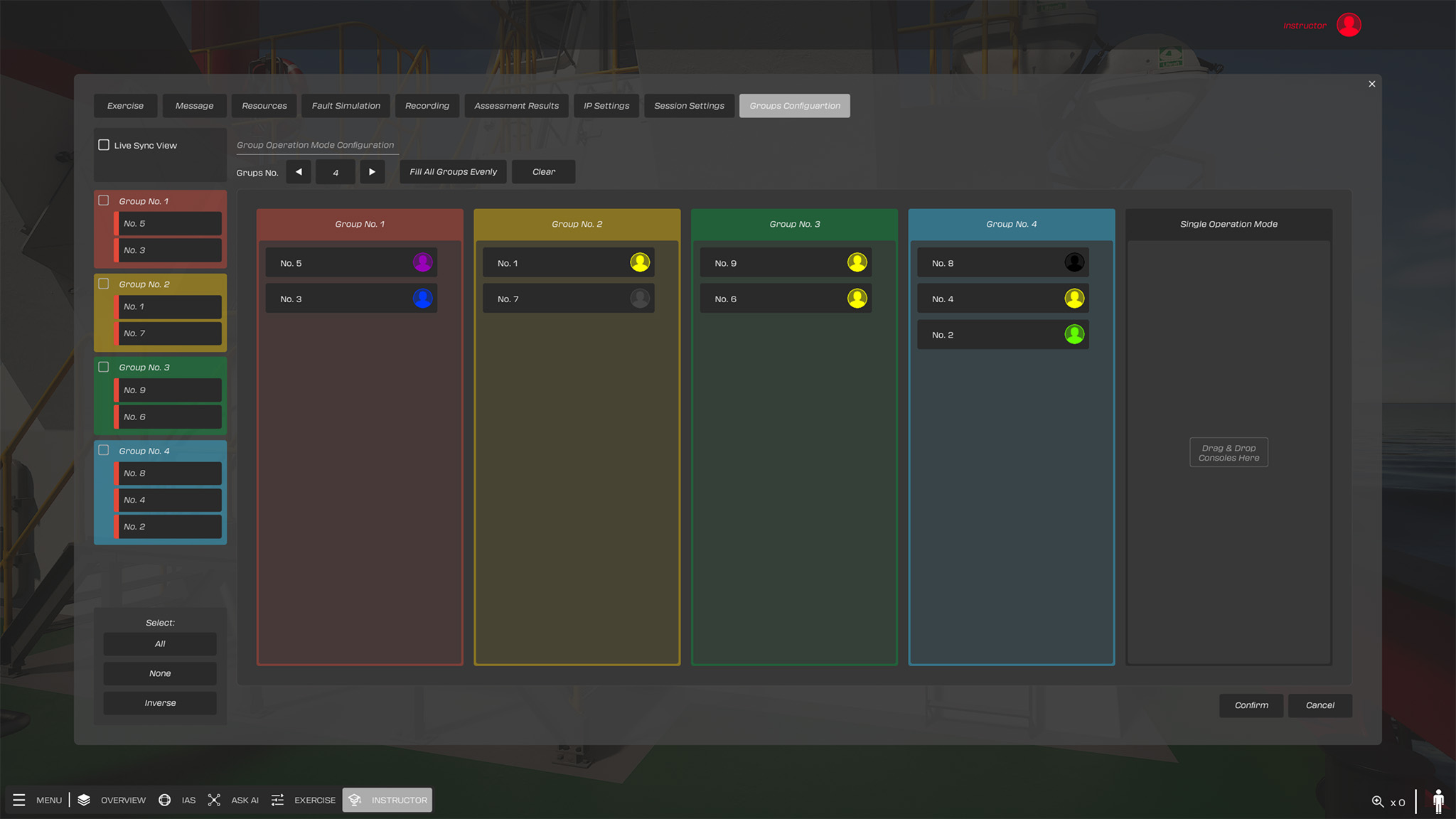
The classroom configuration supports up to 20 student stations and up to four shared training groups. Stations can also operate independently.
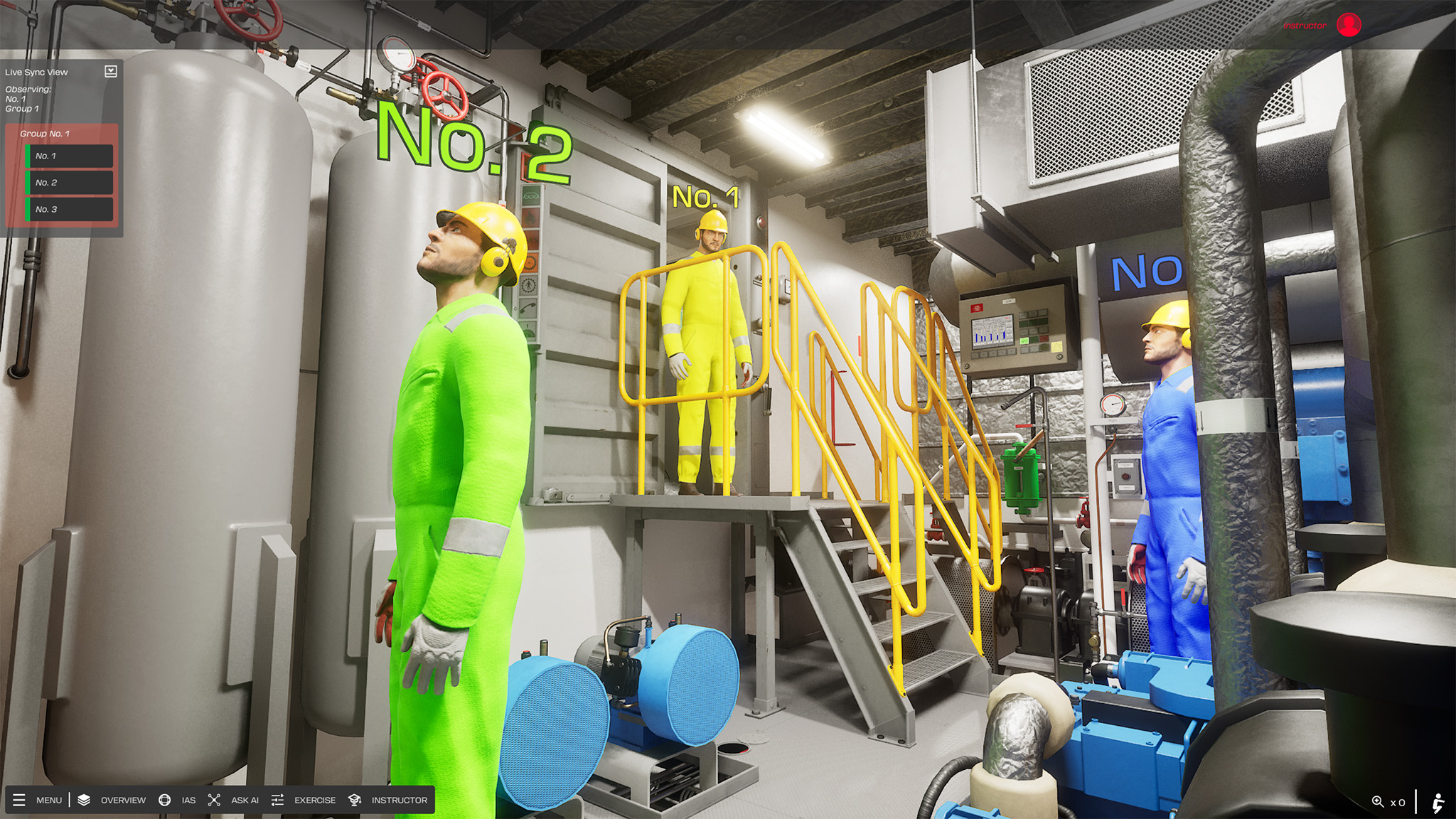
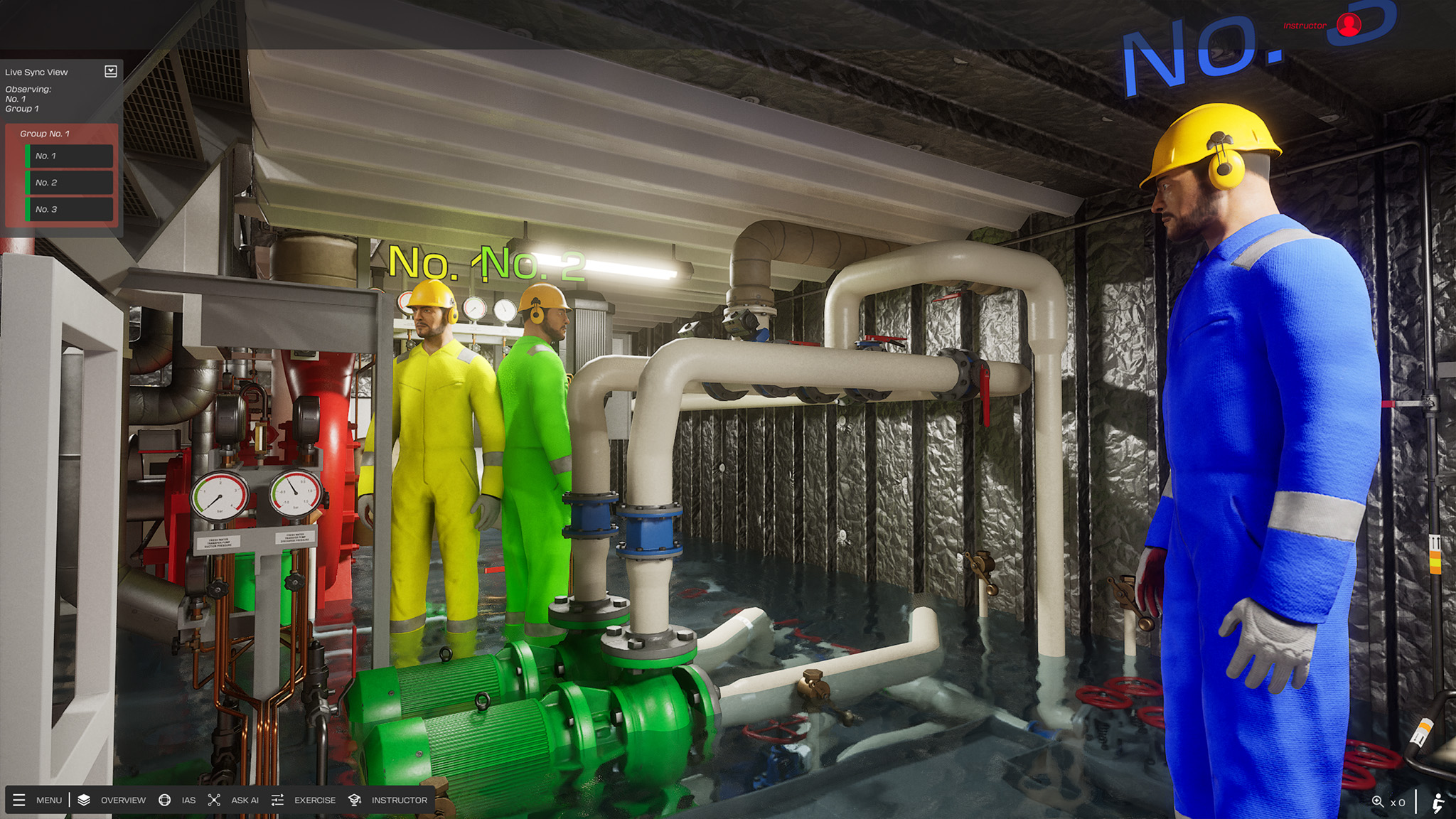
Instructor supervision and exercise control
The instructor can configure initial conditions, introduce faults and use conditional triggers to create developing scenarios. Student Eyes View displays the selected trainee’s field of view, while Live Sync View allows the instructor to observe the shared room with a visible avatar or in ghost mode.
Automatic assessment evaluates exercise results against configured criteria. Session recording and playback support subsequent review and debriefing.
Procedural training and machinery coverage
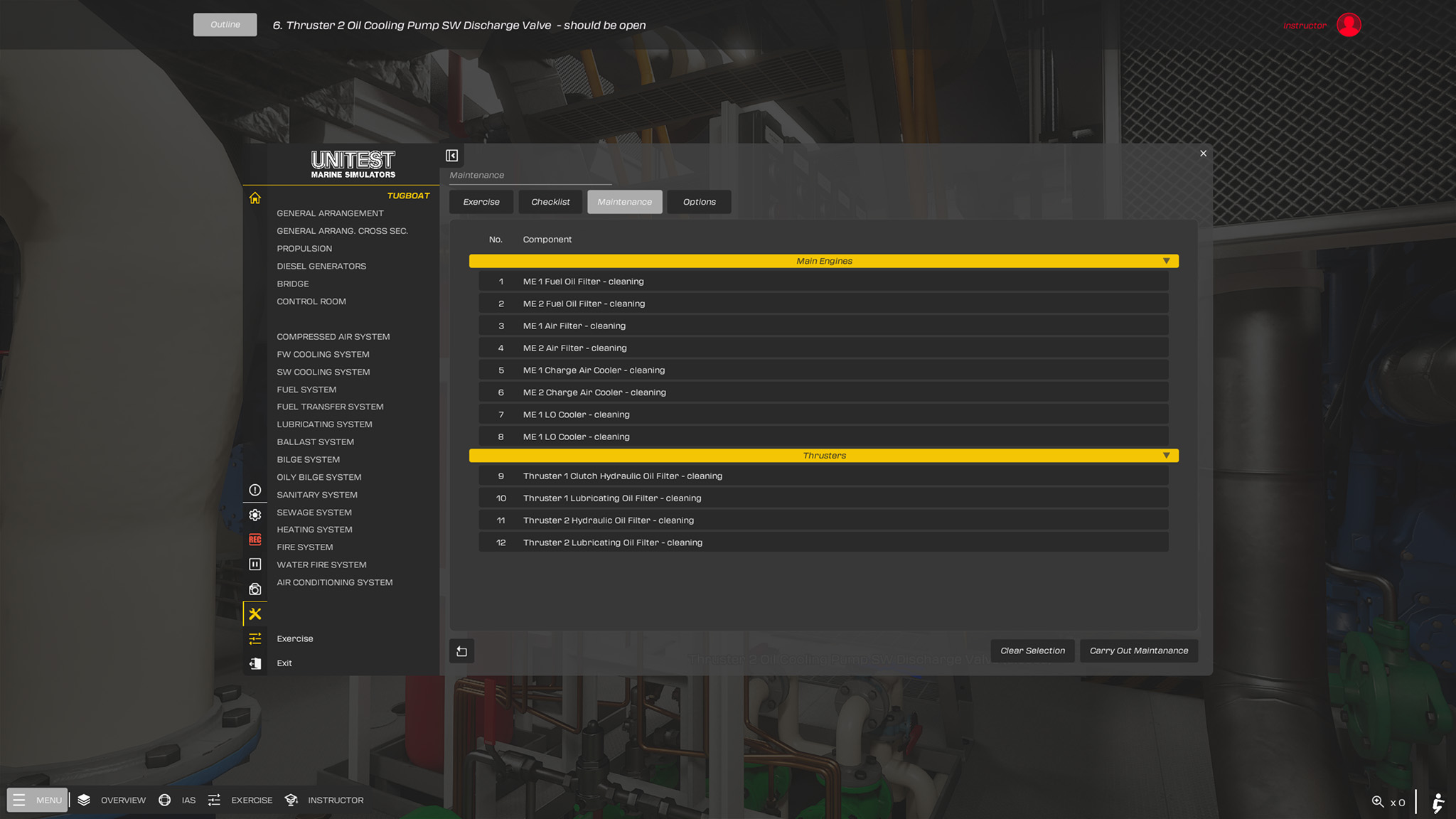
Interactive checklists provide sequential task validation, while Outline guidance helps trainees identify the required components. ASK AI provides operational preparation and maintenance guidance during practice. Supported maintenance tasks include cleaning filters and coolers.
The simulated plant includes two four-stroke diesel main engines driving fixed-pitch azimuth thrusters, two diesel generator sets, auxiliary machinery and an Integrated Automation System. Training covers plant preparation, normal operation, watchkeeping, fault diagnosis and emergency procedures.